Most t-shirt fundraiser advice stops at “design a shirt and sell it.” That is the easy part. The part that determines whether your fundraiser makes real money, or breaks even on a box of leftover shirts nobody wanted, comes down to decisions most organizers make too quickly: whether to pre-sell or order upfront, how to price the shirts so the math actually works, and how to pick a design people will wear after the event is over. This ‘How to Run a T-Shirt Fundraiser’ guide walks through the full playbook in the order you will actually need it.
Step 1: Set a Real Goal Before You Touch a Design Tool

The most common mistake in t-shirt fundraisers is starting with the design and working backward to the money. Do it in the opposite order. Start with a specific dollar goal. Not
“Raise as much as possible” but an actual number tied to something: $2,000 for new equipment, $500 to cover a field trip, $3,500 to offset program costs. A concrete goal does two things. It tells you how many shirts you need to sell, and it tells you whether a short fundraiser is even the right tool for what you are trying to accomplish.
A basic math model to start with: take your goal, add your estimated production cost, then divide by your expected selling price. That gives you the unit volume you need to hit to make the fundraiser worth running. If that number feels unrealistic given your community size, you will find out before you have already committed to a print run.
Example: If your goal is $1,500 and you plan to sell shirts at $25 each with a $10 production cost, you need to sell 100 shirts to hit your number. Does your community have 100 people likely to buy? If yes, proceed. If not, adjust the price, the goal or the model.
Step 2: Pre-Sell or Order Upfront
This is the decision that carries the most risk, and most organizers get it wrong in one of two directions.
The Pre-Sell (Campaign) Model

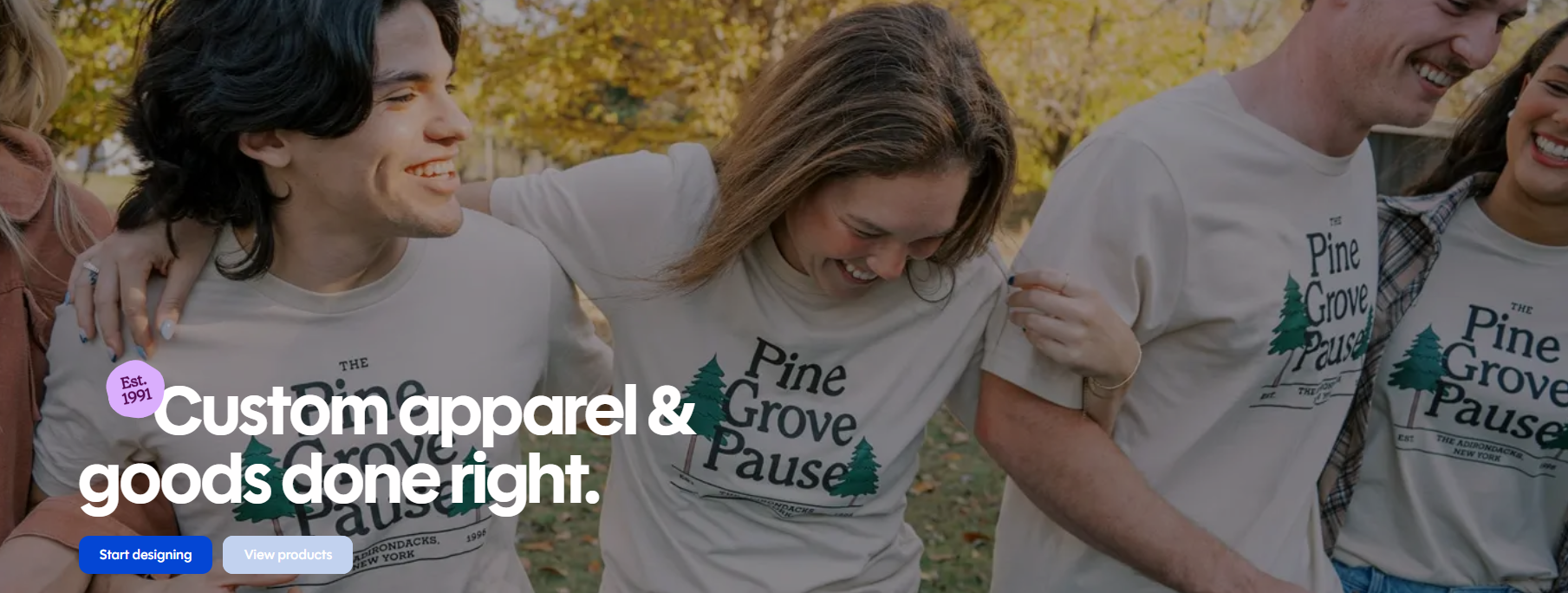
Platforms like Bonfire let you run a campaign where supporters buy shirts individually online, the platform handles printing and ships directly to each buyer, and you collect your profit at the end with no upfront cost and no inventory to manage. Bonfire is free to use and you keep 100% of profits from shirt sales, with a small administrative fee (3.5% for verified nonprofits, 8% for others) only if your campaign also accepts direct donations.
This model eliminates the biggest risk in a traditional shirt fundraiser: every unsold t-shirt is wasted profit, and with a traditional t-shirt fundraiser your organization has to spend money upfront to buy products to sell, leaving you at risk of unsold inventory. Bonfire’s campaign model removes that risk. The tradeoffs are real though. Per-shirt margins are thinner than a bulk order because the platform’s base costs cover individual printing and shipping per buyer. You also give up control over when people receive their shirts, since orders ship individually after the campaign closes rather than arriving as one group shipment. If your fundraiser has an event date where you want everyone wearing the shirt on the same day, the campaign model works against that goal.
When the pre-sell model makes sense: Your audience is geographically spread out, you cannot absorb any upfront cost, you are not sure how many people will actually buy, or the shirt itself is the fundraiser rather than an accessory to a live event.
The Bulk Order Model
You collect sizes, place one order, receive shirts in bulk, and sell or distribute them yourself. This model gives you control over timing, color consistency, and per-shirt cost. At higher quantities, per-shirt cost drops meaningfully, and your margin per shirt is typically better than a campaign platform’s model since you are not paying for individual fulfillment on each unit. Bulk pricing from printers like BlueCotton kicks in at just six pieces and gets better as your order grows, so whether you are outfitting a dozen volunteers or a couple hundred participants the per-shirt cost scales in your favor. The same scaling dynamic applies across most bulk printers: the more you order, the lower your per-unit cost, and the wider your margin on each shirt sold. The risk in the bulk model is straightforward: you are committing to a quantity before you know exactly how many will sell. A 10% size buffer across your most common sizes (typically M, L, and XL) is standard practice. Ordering 10-15% more than your confirmed orders provides flexibility for walk-up sales or last-minute additions without dramatically increasing your total spend.
When the bulk model makes sense: Your roster is fairly locked in, you have a live event where you want shirts distributed on the day, your goal requires a per-shirt margin that a platform model cannot achieve, or you want shirts in hand directly rather than waiting for a campaign to close.
Step 3: Price the Shirts So the Margin Actually Works
Most organizers underprice their shirts. The instinct is to keep the price low so more people will buy, but underpricing eats your margin and means you need to sell more units to hit your goal. A practical pricing framework for bulk order fundraisers:
Find your all-in production costs per shirt. This is not just the print cost. Include any setup fees, shipping divided by units, and the cost of your size buffer (extras you may not sell). If your vendor charges $12 per shirt on a run of 72 pieces with free shipping and no setup fees, your true cost is $12. If there is a $25 setup fee on 50 shirts, add $0.50 per shirt to your cost basis.
Build your target margin. A typical t-shirt fundraiser targets $8 to $15 profit per shirt. At $10 production cost and a $20 selling price, you make $10 per shirt. At $10 production cost and a $25 price, you make $15. The $5 per shirt difference on 100 units is $500 in additional fundraising revenue. Do not leave it on the table by pricing too conservatively.
Consider what the market will bear. Community events and school fundraisers often price shirts between $18 and $25. Charity events and cause-based fundraisers with a strong emotional connection can price higher, sometimes $25 to $35, especially if the design is something people want to own rather than just a one-time event shirt.
Factor in cash vs. card sales. If you are selling at an event and accepting cash, build a price that works with whole dollar amounts without making change a hassle. $20 and $25 are cleaner than $22.
Step 4: Pick a Design People Will Actually Wear Again

The fastest way to kill your sell-through rate is a design that looks like an event program rather than a shirt someone would put on again. The more wearable your design, the easier it is to sell, and the better your word-of-mouth promotion before and after the event.
A few principles that consistently hold:
Simple beats elaborate. A clean two or three color design with strong contrast and clear typography almost always outperforms a busy full-color graphic, especially when printed on a color garment. Fewer ink colors also keep your production cost lower, which improves your margin.
Put the cause front and center, not the logistics. A shirt that says “Run for Hope 2026” with a strong visual sells better than one listing every sponsor and committee member. People wear the former; they leave the latter in a drawer.
Consider the garment, not just the design. A great design on a thin, uncomfortable blank will not sell as well as a good design on something people actually want to wear. Blanks like Gildan 5000 Heavy Cotton or the Gildan 64000 SoftStyle tee are cost-effective choices that hold up well for bulk fundraiser orders and most people are already familiar with in terms of fit.
Survey before you commit. If your audience has an opinion on color or style, a quick poll before you finalize the design can prevent a mismatch between what you ordered and what people actually want to buy.
Step 5: Handle Size Collection Without Losing Your Mind
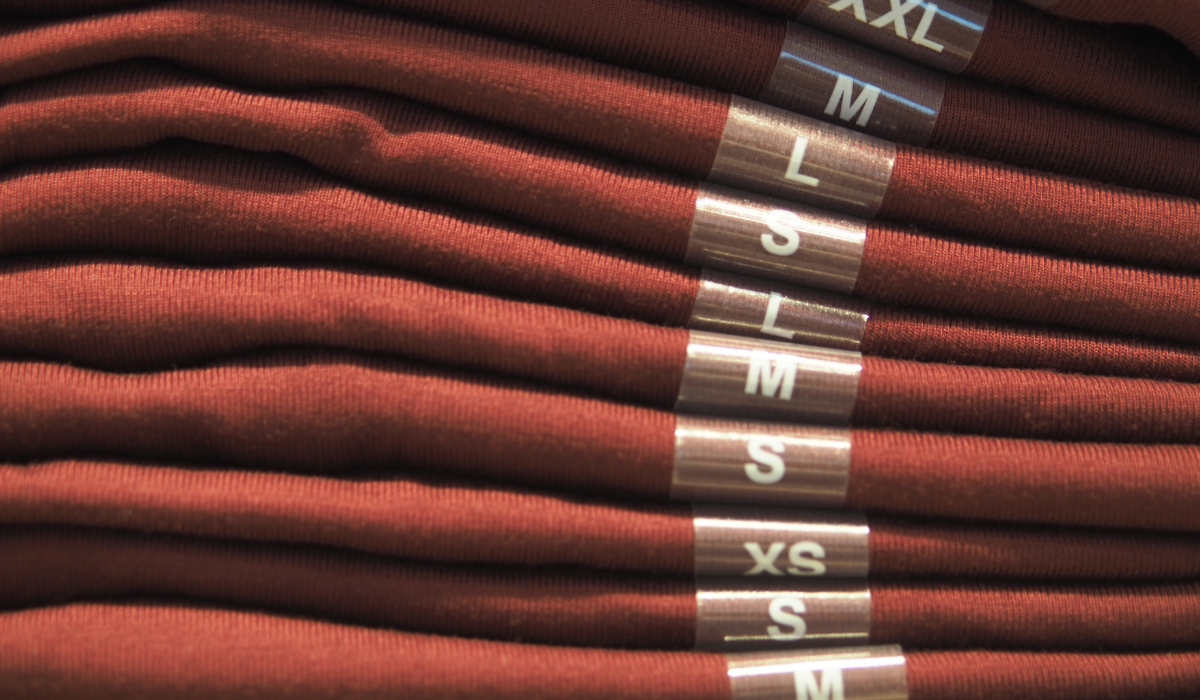
Size collection is where a lot of bulk order fundraisers slow down or derail. A few practices that make this go smoothly:
Set a hard deadline and stick to it. “I need your size by Friday” with no follow-up becomes “we’ll figure it out”. Build the collection deadline into your promotional timeline and treat it as firm.
Collect sizes through one channel, not several. A Google Form or a simple response thread works better than trying to consolidate sizes from email, text messages, and verbal confirmations. One collection point means one place to check.
Add your buffer at the end, not throughout. Confirm your exact size breakdown from submitted orders, then add 10% across M, L, and XL after you have that number. Do not pad individual sizes speculatively before you know your distribution.
Step 6: Know Your Timeline and Work Backward From It

Timeline is where most t-shirt fundraisers run into trouble, and almost always in the same direction: starting the process too late and then having to scramble at the end. Work backward from your event date or distribution date:
6 to 8 weeks out: Finalize your design and confirm your model (pre-sell vs bulk). This is also when to get quotes from vendors if you are going the bulk route.
4 to 5 weeks out: If running a pre-sell campaign, launch it. If doing a bulk order, have your size collection process running and your artwork ready to submit.
2 to 3 weeks out: Bulk orders placed with a printer. For most standard production windows, this is comfortable. Confirm a specific delivery date with your vendor before submitting.
1 week out: Shirts should be in hand. This gives you time to sort by size, address any quality issues, and handle distribution before the day of your event.
The most common point of delay in a bulk order is the design approval process. If your artwork needs adjustments before it is print-ready, that back and forth can eat a week of your timeline. Submit the cleanest file you have (300 DPI or higher, vector preferred) at the start and expect at least one revision round.
Step 7: Plan for Leftovers Before You Have Them
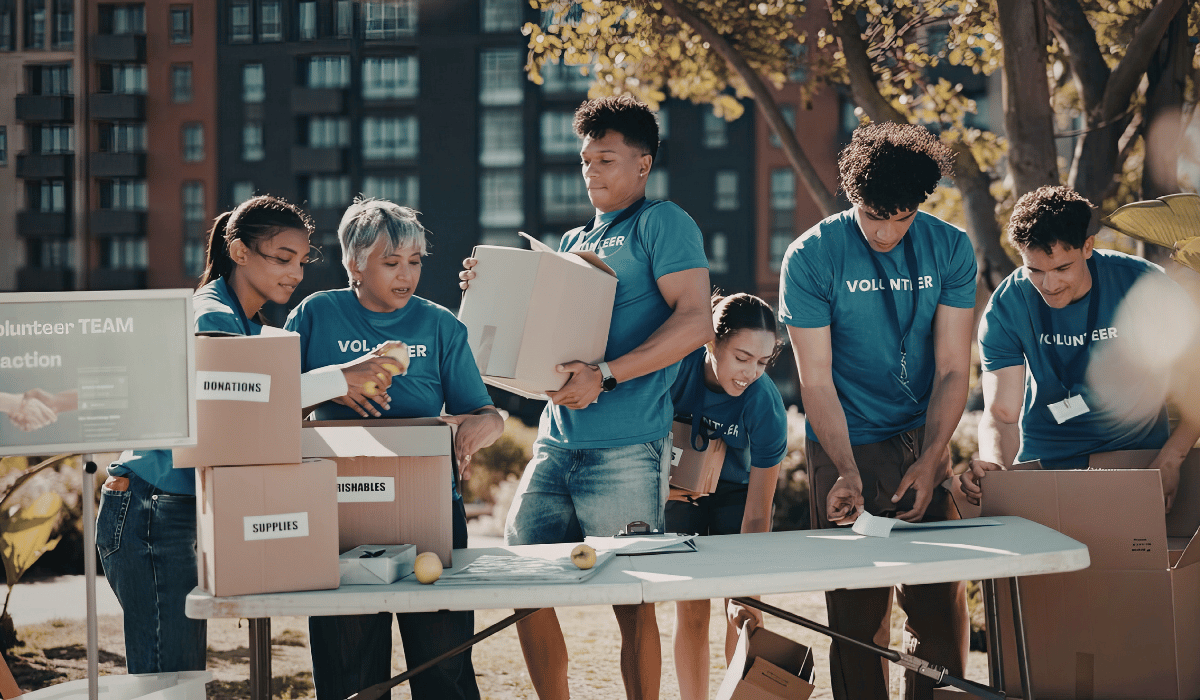
If you are running a bulk order, you will likely have some shirts left over. Having a plan for them before the event prevents them from sitting in a closet. Options for left over inventory that work:
Extend the sale window. After your event, offer remaining shirts online through a simple order form or your organization’s social channels. Many people who missed the event or were on the fence will buy after seeing others wearing the shirt.
Discount and sell at a follow-up event. A table at your next community gathering with remaining shirts at a reduced price moves inventory and generates additional fundraising revenue.
Donate to your cause. If you do have unsold shirts you need to sell, you can make some of your investment back by offering them at deep discounts or donating them to the cause or organization you are fundraising for.
Build a smaller buffer next time. A leftover rate about 10 to 15% of your total order is a signal that either your price point, your design, or your marketing needs adjustment for the next run.
Where to Get Shirts Printed for a Bulk Fundraiser
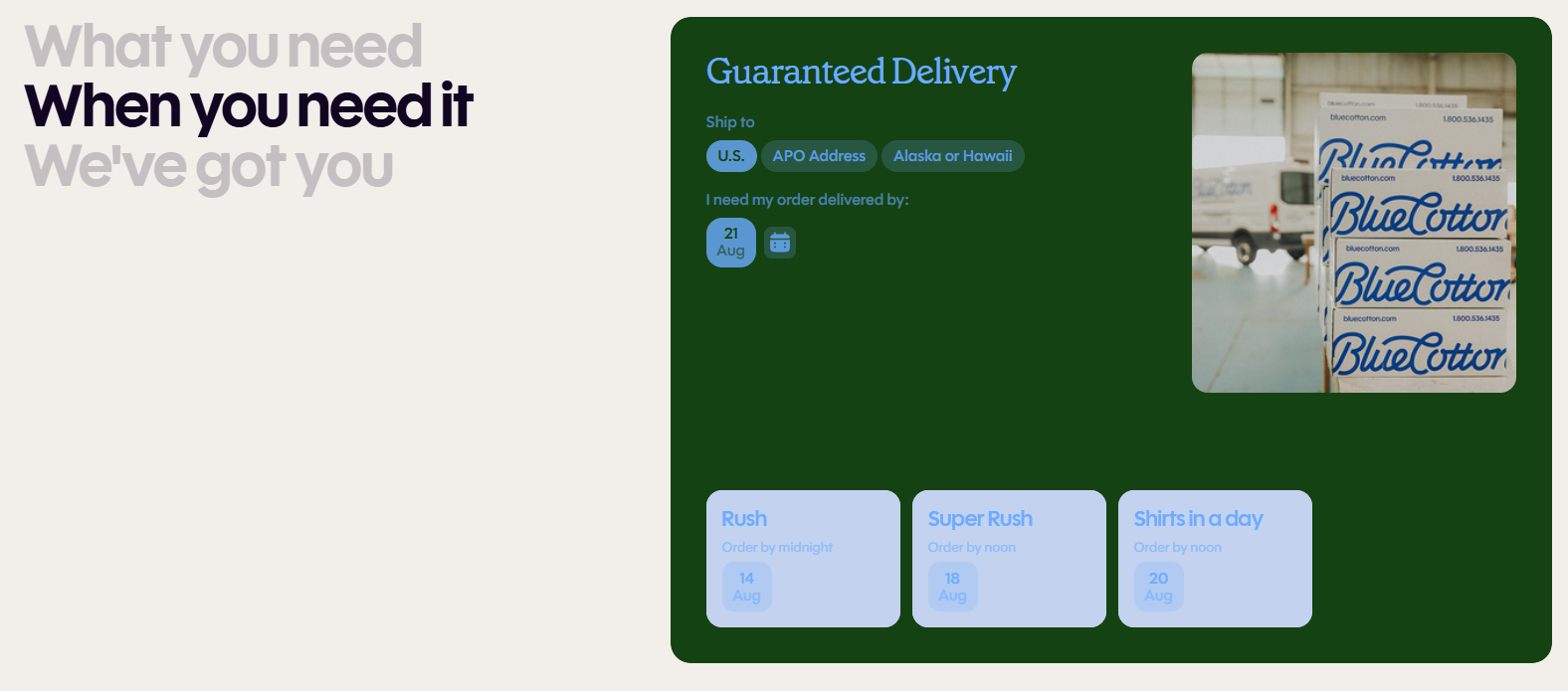
For bulk fundraiser orders specifically, the variables that matter most are per-shirt cost at your target quantity, whether the vendor includes shipping in that price, and whether they will give you a guaranteed delivery date rather than an estimate.
As an example, BlueCotton’s pricing includes free shipping, orders start at just 6 pieces, and per-shirt cost decreases as quantity grows. Their rush options are useful if your timeline compresses, and because everything is printed in-house, the delivery date they give you is a commitment rather than a projection.
For pre-sell campaigns, Bonfire remains the most widely used platform for fundraising specific shirt campaigns, with a transparent base cost model, no upfront fees, and 100% of profits going to the organizer.
The Short Version
A t-shirt fundraiser works when you set a real dollar goal first, choose a model that fits your risk tolerance and event structure, price the shirt so the margin is actually worth the effort, and give yourself enough runway to handle the production and approval process without scrambling. The design matters less than most organizers think. The pricing and the timeline matter more. Get those right, and the shirts take care of themselves.