
If a customer calls while you’re busy and they’re put through to voicemail, you won’t necessarily lose their business. But you’ll still need to listen to the message, find time to call back, and hope they haven’t already contacted someone else.
An AI answering service is designed to reduce that risk. It can answer calls immediately, handle routine questions, capture customer details, and sometimes take action when no one on your team’s available. That’s much more useful than a simple recorded greeting.
The short answer

An AI answering service may be a good investment if your organization regularly takes phone calls that generate meaningful revenue and if missed calls are a recurring problem.
It can be particularly useful for appointment-based and local service businesses, as it can help a caller to make an appointment without having to wait for a callback.
On the other hand, if your business receives very few calls that lead to significant sales, or usually involve complex conversations that require human expertise, then the case for an AI answering service isn’t as strong.
In industries where customers expect a close personal relationship with a company from their very first call, the question is whether an AI answering service can cover enough calls to justify its cost.
Ultimately, the decision comes down to that simple calculation: can the service recover enough revenue, save enough staff time, or improve enough customer experiences to justify its monthly cost?
Voicemail can be a bigger risk than it looks

In theory, voicemail offers insurance when workers aren’t available, as a caller can just leave a message for them to check later. But many don’t.
In January 2025, CallRail released a report based on 1.1 million leads across key industries like legal, real estate, financial services, and healthcare. It found that up to 85% of customers whose calls go unanswered simply won’t call back. This is particularly concerning, given that the same study found that missed call rates range from 9% for real estate to 32% for healthcare.
This doesn’t prove that every missed call would have converted into a sale in every sector. But it does show that relying too heavily on voicemail can leave a considerable gap in a company’s sales process.
The risk of a customer failing to call back if calls aren’t answered can be greater if the call is urgent or if the customer assumes several providers in the same sector are interchangeable. For instance, if someone has a burst pipe that’s flooded their basement or a very sick pet, then they’re more likely to keep dialing different numbers until someone answers.
No matter how friendly and helpful a voicemail greeting is, it can’t qualify leads, give detailed information about availability, or help someone to book an appointment.
Businesses also need to consider the cost of missed calls relative to what’s already been spent on advertising, search listings, referrals, or a website. In other words, making sure a higher proportion of calls are answered can cost an organization less than trying to buy more overall traffic.
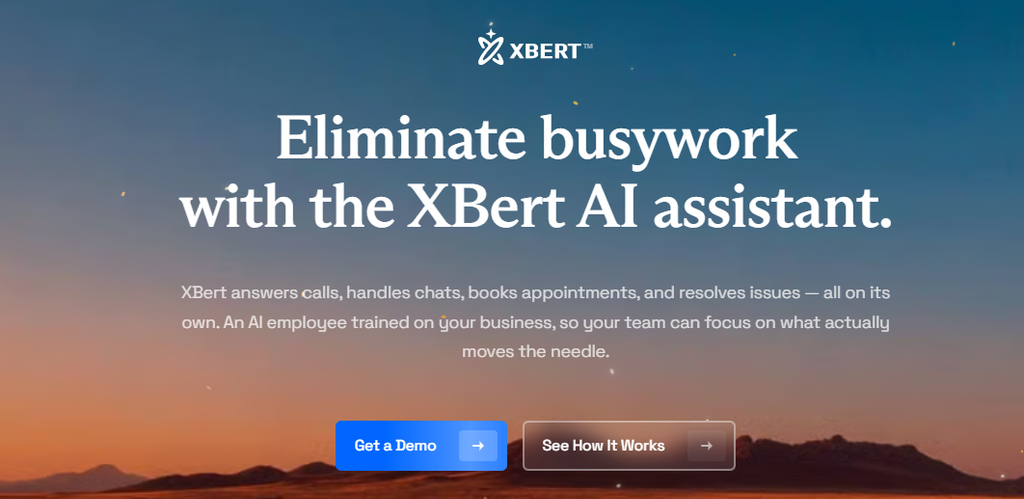
For example, Xbert by Nextiva costs $99 per month for up to 100 qualifying interactions. A qualifying interaction can include a phone call lasting more than 30 seconds, or an SMS or web-chat exchange involving a minimum of three AI responses. Additional interactions are billed separately, so businesses need to estimate their likely volume before signing up.
This pricing model makes the ROI easier to estimate. If a service costs $99 per month and one recovered booking generates more than $99 in gross profit, that alone will cover the subscription.
This is only a starting point, though. These prices don’t include costs associated with setup and configuration, staff review time, and so on. But it does show that the right AI answering service can pay for itself if it’s able to handle profitable calls that would otherwise be missed.
What an AI answering service can do
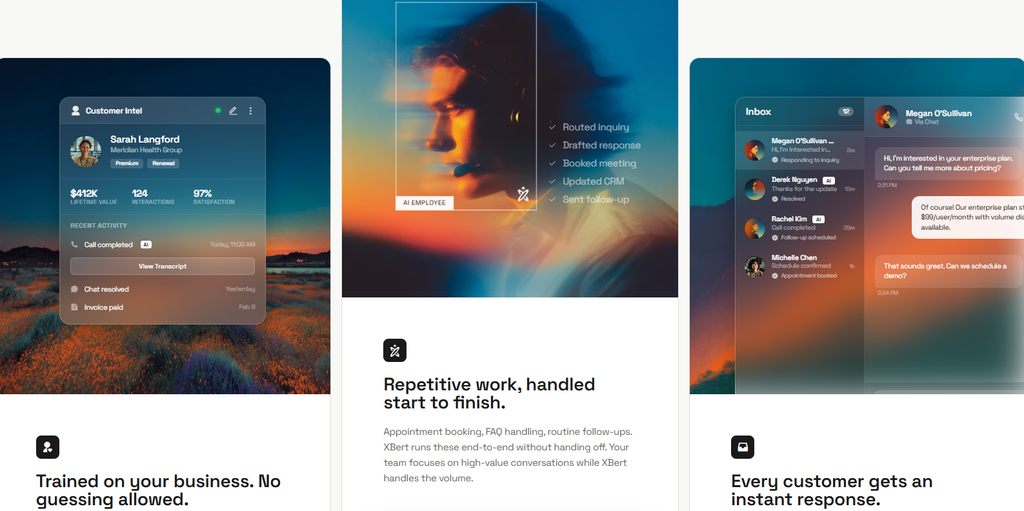
The features of an AI answering service depend on the provider, pricing tier, and how the product is configured. In general, these services use conversational AI to understand callers and respond in a generated voice.
Depending on the specific product and configuration, an AI answering service may:
- Greet callers using a script you’ve designed
- Answer common questions, such as business hours, services offered, pricing, and policies
- Collect names, contact details, and other intake information
- Qualify leads according to preconfigured rules you’ve set
- Handle booking, changes to, and cancellation of appointments
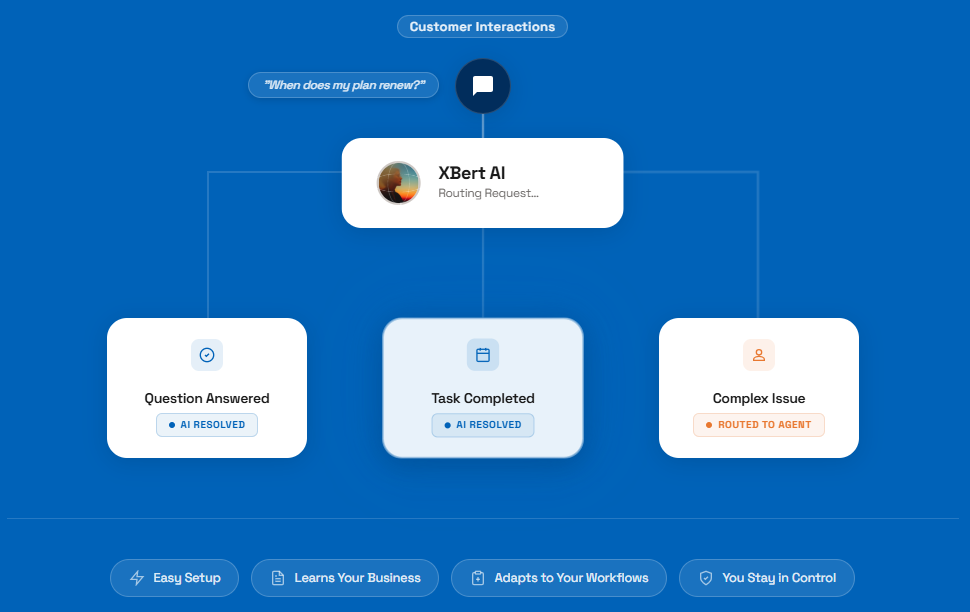
- Flag when a call is urgent and/or complex and route it to an appropriate human
- Send confirmation and/or follow-up text messages
- Generate transcripts and call summaries
Some of these features can be approximated by a basic IVR, such as an automated greeting saying “Press 1 for Sales”. However, an AI answering service generally allows callers instead to describe what they need in their own words.
It can also handle a larger volume of routine calls than a traditional live answering service, which typically relies on agents following prepared scripts and taking messages. A correctly configured AI system can also offer immediate availability and consistency, as well as handle multiple calls at once.
For example, XBert can answer common questions, collect and qualify leads, book appointments, and route requests to employees with the conversation context attached. It can also integrate with calendars and CRM systems.
This can be extremely useful if you want the service to do more than take messages, but the specific AI answering service features you’ll benefit from will depend on your organization’s needs and the product in question.
The value of 24/7 coverage

Round-the-clock coverage doesn’t mean your business necessarily has to staff the phones night and day. It just means callers can receive a useful response whenever they get in touch.
For instance, a routine inquiry might simply concern your organization’s opening hours. A sales lead might mean gathering project details or scheduling a consultation. If an existing customer has an urgent problem, they may need to be transferred right away to an experienced employee.
The goal isn’t to solve every problem automatically, but to keep the conversation moving outside regular business hours.
If your business also relies on texts and web chat, tools that give employees a shared view of those conversations may be useful. If you only need occasional message-taking and have no use for booking, chat, or CRM connections, it may be more than you need.
Where AI answering services can go wrong

An AI receptionist is only as useful as the information, instructions, and escalation rules behind it.
If it has been given incomplete information about your services, prices, coverage areas, or policies, it may give callers vague or inaccurate answers.
Even an AI answering service with a well-organized dataset can’t manage every conversation automatically. For instance, a customer may be very upset and insist on speaking to a human representative.
If sensitive legal or medical issues are flagged during a call, or if complex estimates are required, then the system may also need to escalate the call to a person with the right degree of judgment and empathy to help the caller.
Certain customers may also react badly to speaking to AI, such as if they feel the virtual receptionist’s voice sounds unnatural, or they’re interrupted. If they have trouble navigating the preconfigured options, they may also feel like they’re trapped in an AI loop.
Vendors regularly seek to reassure clients about these potential pitfalls with demos of their AI system, but this isn’t always a reliable benchmark of how it will handle real callers. That’s why it’s vital to test with different accents, background noise, interruptions, unconventional names, vague questions, and requests that fall outside the AI’s script.
Data security always matters, so you should also check with your chosen platform:
- What data it stores
- How long it retains recordings and transcripts (and who can access them)
- Whether the setup meets your industry’s compliance requirements e.g. HIPAA
Many business phone providers publish security documentation for existing and potential customers. Nextiva encrypts call data in transit and at rest and can redact certain sensitive information like histories and notes.
Those features can’t, by themselves, prove that a business meets HIPAA or other regulatory requirements. Organizations in regulated sectors always need to verify the provider’s documentation, contractual terms, and their own compliance obligations before using AI to handle any sensitive customer information.
AI answering service alternatives
An AI answering service can be a good fit for certain situations, but it’s not the best choice for every organization and scenario.
For instance, simply continuing to use voicemail is an option, but it may provide much less active coverage than an AI answering service.
Text messages sent out after missed calls are relatively inexpensive and easy to set up. They can be configured to do things like acknowledge a caller’s inquiry and provide a booking link for an appointment, though the customer may still be disappointed that they didn’t get the conversation they wanted.
When callers need to be treated with a high degree of sympathy and expertise, a traditional live answering service can be a solid choice. Organizations can hire a suitably experienced human receptionist who can also do other kinds of work when they’re not on the phone. But it usually comes with a much higher fixed labor cost than an AI tool with a relatively low monthly starting price and usage-based charges.
For many businesses, the best compromise is usually a hybrid option. You can allow AI to handle common questions, intake scheduling, and after-hours calls but allow urgent, sensitive, or unusual issues to be transferred to a human. This reserves employees’ attention only for those conversations where it adds the most value.
Making the decision
An AI answering service can be a good investment in those scenarios where it solves a measured problem.
For example, if you find that calls to your business are often going to voicemail, potential leads aren’t calling your reps back, and routine conversations are taking up too much of your staff’s time, then deploying 24/7 automated coverage with AI can be more efficient and cost-effective than hiring more full-time workers.
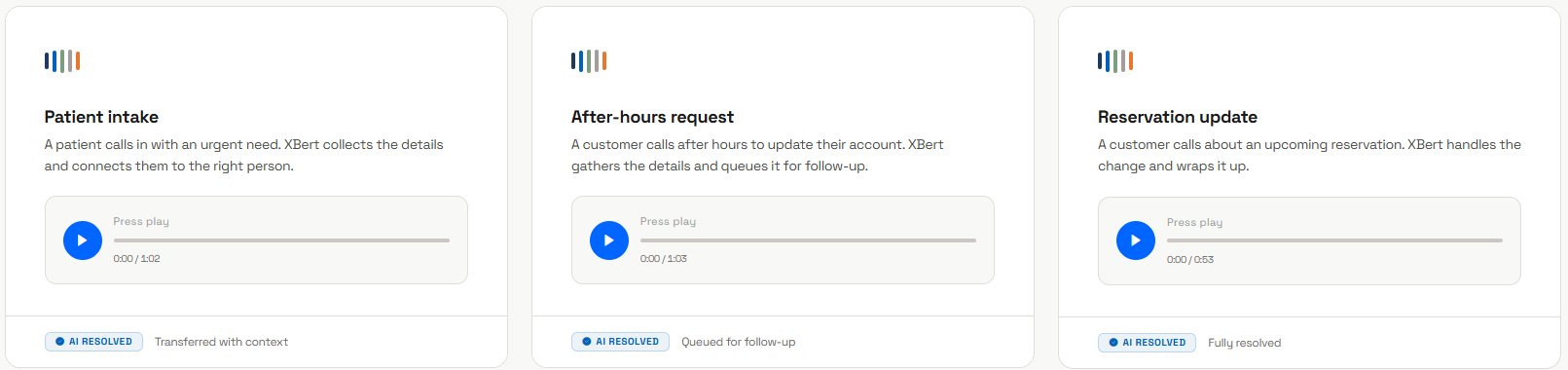
Tools like XBert are also worth considering if you need to combine phone answering with text, chat, scheduling, lead capture, and clear handoffs to employees. However, you should never subscribe to any tool based on its feature list.
Instead, test it with real call scenarios, listen to sample conversations, configure escalation rules carefully, and use any trial period to measure booked appointments, qualified leads, successful transfers, and customer complaints.
Overall, your goal should be to find a system that answers promptly, can handle straightforward queries directly, and has a well-configured and reliable escalation path to bring in people as necessary. If you can do all of this for less than the profit from the customers you would otherwise lose to voicemail and missed calls, then there’s a strong case for such an investment.