If you are responsible for ordering shirts for a company volunteer day, you likely already know the actual problems you are facing. It is not which logo placement looks best. It is figuring out where to order from, how many to get when the headcount keeps changing, and how to make sure everything arrives before the date your partner organization set months ago and will not or can not move.
The Variables that Make Volunteer Day Shirt Orders Different
Volunteer Day shirt orders have a specific set of complications that normal group orders don’t. Understanding them upfront changes which vendor is a better fit.
Headcount uncertainty. People sign up to volunteer and then drop out. Others add themselves late. The person coordinating shirts rarely has a firm headcount until a week or two before the event, which puts them in a bind. Order too early and you’re guessing sizes; order too late and you’re in rush territory.
The event date is fixed by someone else. Unlike a company retreat or internal event where you control the calendar, volunteer days are often anchored to a partner organization’s schedule. Habitat for Humanity, food bank, school, or park’s department they set the date, and it can’t move because your shirts arrived late. This makes guaranteed delivery dates a harder requirement than they are for most other custom apparel orders.
You’re ordering for a mixed group you don’t manage directly. In a typical corporate shirt order, you know your employees, you have their sizes on file, and you can chase people down. For a volunteer day, you may be collecting sizes from a mix of full-time staff, contractors, interns, and in some cases client or community participants. Size collection becomes a genuine logistics task, not just a formality.
Fabric choice matters more than people expect. A volunteer day doing outdoor labor (building, painting, landscaping, moving materials) has different shirt requirements than one doing indoor packing or sorting. For outdoor physical work in warm weather, a lightweight cotton or moisture-wicking blend is a meaningful upgrade over a standard heavyweight tee. For indoor work, it may matter less. This is worth a quick call to your vendor to ask what they’d recommend for your specific type of activity.
The annual reorder question. If your company runs the same volunteer day program each year, the shirt decision has a second layer: do you order a new design each year or reorder the same one? It depends on whether the shirt is meant to be a keepsake or a functional uniform.
What to Look for Before You Choose a Vendor
Before you compare options, a few questions that narrow the field quickly:

Can they guarantee a delivery date in writing? Not an estimate, but an actual guarantee. If your volunteer day is a fixed date and they can not guarantee the shirts arrival in time, that is a real problem. Ask this question first. Some vendors will commit; others will give you a window.
Is production in-house or outsourced? Vendors who route orders through outside production partners introduce variability in timing that in-house printers don’t. For a corporate order with a firm event date, in-house production means one team is responsible for the full run. Having one point of contact can actually tell you where your order stands. This adds accountability to your order.
What are the real rush costs? Standard production windows are fine when you have four to six weeks. When your headcount doesn’t stabilize until two weeks out, you need to know the actual cost of expediting before you’re in that situation. Get the rush tier pricing in advance so you’re not surprised.
Do they carry the garment style you need? If you want a moisture-wicking performance shirt for an outdoor Labor Day, confirm your vendor has that option because not every printer stocks athletic-fabric blanks across all sizes. If you need youth sizes for an event where families participate, confirm that too.
Vendors Worth Considering
Custom Ink
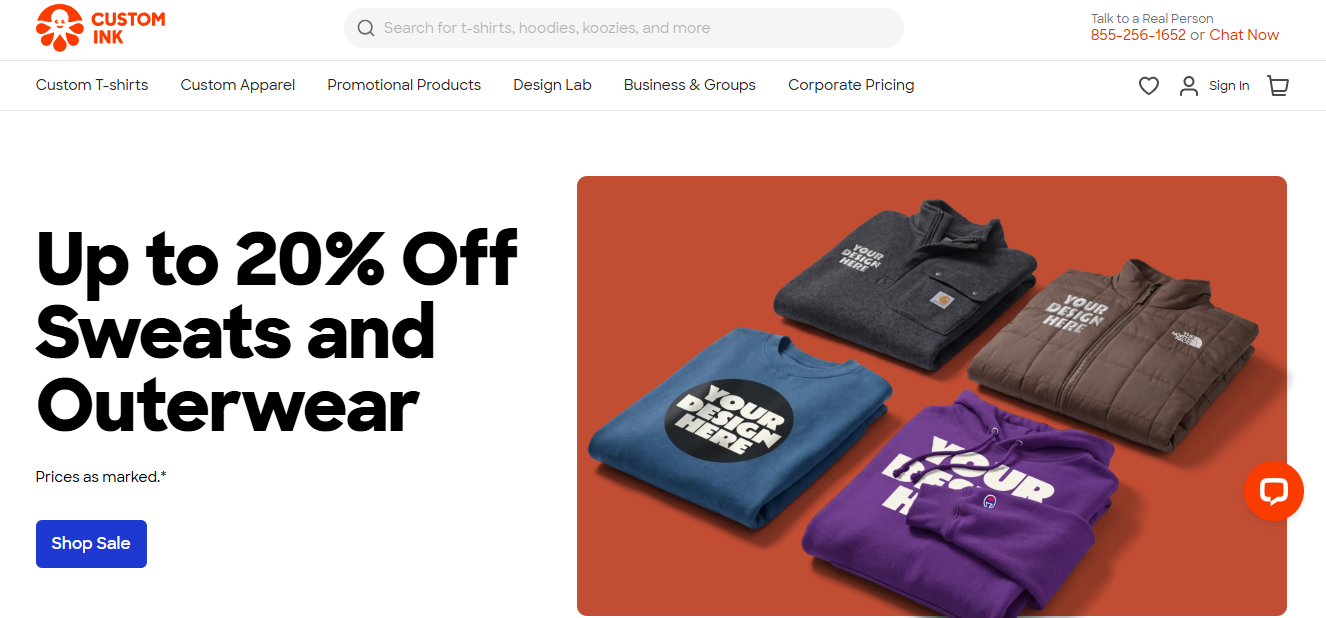
Custom Ink is the vendor most HR teams contact first. Their design tool is genuinely easy to use. Their catalog is extensive, and they handle corporate volunteer orders routinely. Pricing is transparent with no hidden fees, and per-piece cost decreases automatically as quantity increases. Standard delivery runs approximately two weeks, with a Rush option at one week for an additional 15% of the order total and Super Rush at three business days for an additional 30%.
The structural detail worth understanding is that Custom Ink has shifted production to a network of outside digital print fulfillers, which gives them broad product reach but means your production timeline can vary depending on which partner handles your order. For orders placed four to six weeks out, this rarely matters. For a fixed volunteer day date with no flexibility, ask specifically whether your delivery tier comes with a guaranteed date.
Best for: HR teams who want a familiar, easy-to-use vendor with a wide product catalog, orders with comfortable lead time, situations where the shirt is one of several branded items in a broader order.
Watch for: Confirm your delivery tier is guaranteed rather than estimated before submitting if your event date is firm.
4imprint
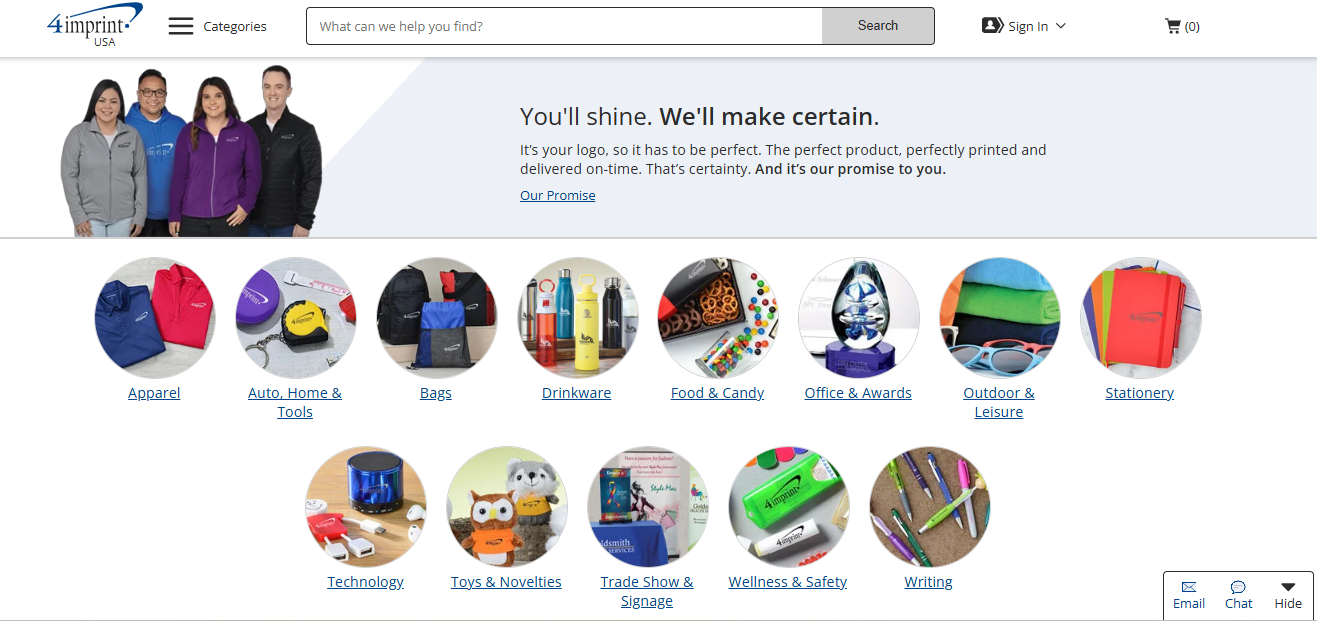
4imprint is the dominant name in corporate promotional products, and for companies that want shirts alongside other branded items (bags, water bottles, lanyards, branded swag for the event), they offer one-stop ordering that simplifies vendor management. They offer free samples before you commit to a full run, free artwork assistance, and a stated delivery guarantee. Their catalog runs to 30,000+ items, which is useful when a volunteer day involves more than just shirts.
The tradeoff is the model. 4imprint acts as a coordinator between you and their supplier network rather than printing in-house. That model works well for companies that have established budgets and comfortable lead times. For tighter timelines or situations where you want to speak directly to the people producing your shirts, the layered structure can slow things down.
Best for: Corporate teams ordering shirts as part of a broader branded kit, organizations with four to six weeks of lead time, companies that want a free sample before committing to a full run.
Watch for: Ask specifically about the turnaround on your shirt style and quantity, since timing varies across their supplier network. If other branded items in your kit have different lead times, plan the shirt order to the shortest window.
BlueCotton
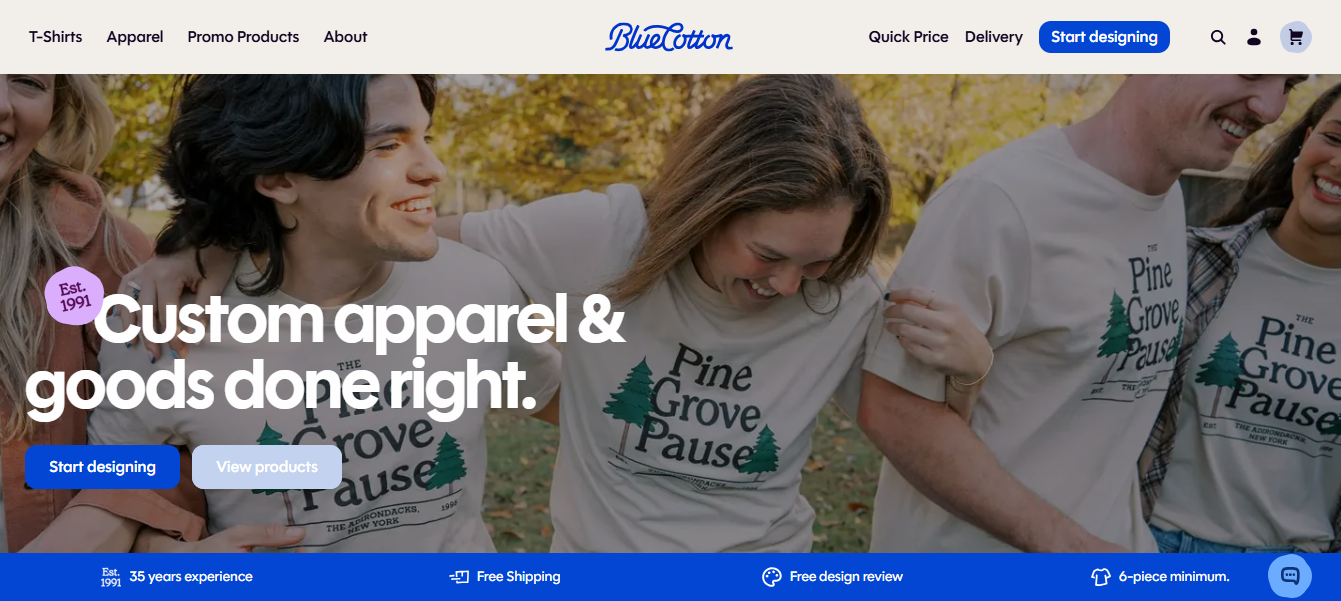
BlueCotton’s production model is structurally different from both vendors above. All custom t-shirt printing and production happens at their 50,000-square-foot facility in Bowling Green, Kentucky. Their team oversees printing, packaging, and shipping on every order, with a nine-step quality check before anything leaves the building.
For a volunteer day with a fixed date set by a partner organization, that in-house model matters in two concrete ways. First, BlueCotton guarantees delivery on every order. Second, because customer service is inside the same facility as production, if something needs to be resolved (a size question, a design issue, a last-minute addition), you’re talking to someone who can actually check on your order rather than escalating through a vendor chain.
On timing, the full range of options confirmed from their current site:
- Standard production: delivery in 10 business days, free shipping
- Rush: delivery in 5 business days, +15% of order total or $25, whichever is greater
- Super Rush: delivery in 3 business days (order by noon CST), +25% of order total or $39, whichever is greater
- Shirts in a Day: delivery in 1 business day (order by noon CST), +40% of order total or $69, whichever is greater, limited garment selection
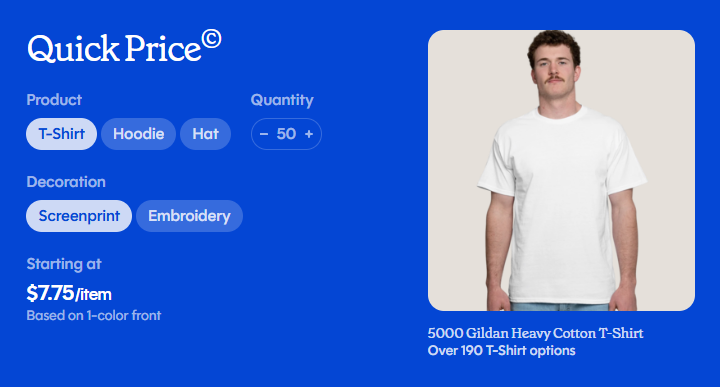
Orders range from 6 pieces to several thousand, with bulk pricing built in for bigger runs. Free shipping is included on standard orders to all 50 states. No setup fees. The per-shirt cost decreases with quantity.
For volunteer days where headcount uncertainty pushes your order later than ideal, the 3-day and 5-day rush tiers are real options with known upfront costs, not vague expediting charges you find out about at checkout.
Best for: Corporate volunteer days with a fixed date set by a partner organization, HR teams who need a guaranteed delivery commitment, mid-to-large group orders (25 to 300+ people) where timeline reliability matters more than having the widest possible product catalog.
Watch for: If you want shirts alongside other branded swag in a single order, you’ll need a second vendor for non-apparel items. BlueCotton focuses specifically on apparel.
Handling Size Collection for a Group You Don’t Manage
Size collection for a volunteer day involving employees across departments, contractors, and possibly external participants is messier than a standard employee order. A few practices that consistently help:
Use one collection channel. A Google Form with a size dropdown and a deadline is cleaner than consolidating sizes from email replies, Slack messages, and verbal confirmations. One source of truth makes the ordering process faster and reduces errors.
Set a firm cutoff and build your buffer after. Collect confirmed sizes first, then add 10 to 15 percent across your most common sizes (typically M, L, XL for a mixed adult corporate group). Adding a buffer before you know the distribution leads to the wrong extras.
Confirm what size range your vendor covers. If your group includes participants who wear extended sizes (2XL and above), confirm availability and whether those sizes carry a price difference before you’ve committed to a vendor.
Build in distribution time. For a volunteer day, you want shirts in hand at least three to five days before the event to sort, label by recipient, and handle any issues that come up. Work backward from your event date, not from the vendor’s standard production window.
The Annual Reorder Decision
If your company runs a volunteer program every year, the shirt decision has a longer-term layer worth thinking through before your first order.
An undated design (company name, program name, no year) allows you to reorder the same shirt each cycle without a new design process. You carry leftovers inventory forward, reduce the per-shirt cost over time as you refine your size distribution, and eliminate the yearly art approval. The downside is that shirts from different years look identical, which some programs see as a feature and others see as a drawback.
A dated design creates a keepsake element (“2026 Day of Service”) that participants can keep rather than discard, and it gives returning volunteers a visible record of participation. The tradeoff is a new order each year and no ability to carry inventory forward.
If your program is still in its early years, an undated design is typically the lower-maintenance choice until you know how many people participate, how sizes distribute, and whether anyone actually wants the shirt as a keepsake.
The Short Decision Table
| Situation | Best Fit |
| 4 to 6 weeks of lead time, want easy design tool and a broad catalog | Custom Ink |
| Want shirts plus other branded event items in one order | 4imprint |
| Fixed date set by a partner organization, need guaranteed delivery commitment | BlueCotton |
| Headcount uncertain until 2 weeks out, need a known rush cost | BlueCotton (Rush or Super-Rush tiers) |
| Need shirts tomorrow | BlueCotton Shirts in a Day (limited garment selection) |
The vendor question for a corporate volunteer day comes down to two things: how firm are your event dates? How late do you expect your headcount to stabilize? Those two variables, more than price or catalog size, are what should drive your decision.


