
Every startup’s first forecast lives in a spreadsheet. It’s like learning to walk before you can run. It has a revenue tab built on a growth rate somebody picked in a pitch meeting, a headcount tab with too many future hires, and a “runway” cell at the bottom that the founder checks more often than their email. It works, right up until the board asks for a second scenario, the one person who understands the formulas is on vacation, or the actuals (the accounting term for the real revenue and expenses recorded in your books) stop matching the plan.
That’s usually when the software shopping starts, and it’s where a lot of founders overspend. The budgeting and forecasting market runs from free templates all the way up to platforms that cost more per year than your first engineer. Most of the content you’ll find is written by the vendors at the expensive end, so it tends to skip the honest answer for many early teams, which is that you might not need a dedicated planning tool yet. Here’s how the market actually breaks down, and how to tell which rung of the ladder you’re standing on.
The Right Forecasting Tool for Your Startup’s Stage

Match the tool to the decisions you’re making, not to how sophisticated you’d like your finance function to look. If your main questions are “how much cash do we have, how fast are we burning it, and when do we need to raise,” you need accurate books and a solid cash projection, and an accounting platform like Puzzle that calculates burn, runway, and a 13-week cash forecast from live data covers that without a separate tool.
If you need budgets by department, multiple scenarios, and board-ready plan-versus-actual reporting, it’s time for a spreadsheet model built on clean actuals or an entry-level planning platform like Jirav. Dedicated FP&A platforms like cfo.ai and Abacum earn their price once you have a finance team, several departments with their own budgets, and data coming from more than just the ledger.
Startup Budgeting and Forecasting Software at a Glance
| Tool | What it is | Pricing | Best fit | Watch out for |
| Spreadsheets (Excel or Google Sheets) | DIY financial model you build and update yourself | Free with tools you likely already pay for (like Gmail, Google Workspace or Microsoft 365). | One founder managing the numbers at pre-seed or seed | Manual data entry and messy file versions as the team grows |
| Puzzle | Accounting platform with built-in cash and runway tracking | From $30 a month; forecasting features from $72 a month | Teams focused on cash and runway who want clean books first | No budgets by department or what-if scenarios |
| Jirav | Starter FP&A tool for scenarios and budget tracking | Around $10,000 to $15,000 a year (quote-based) | Startups working with a part-time or fractional CFO | Plan limits on users, departments, and integrations |
| cfo.ai (formerly Runway) | AI CFO that builds and updates your model automatically | $375 to $1,125 a month billed annually; free trial available | Lean startups that want scenarios without hiring a finance team | New product with a short track record; capped integrations |
| Abacum | Full FP&A platform connecting finance, HR, and sales data | Median of about $43,750 a year (quote-based) | Larger companies with an in-house FP&A team | Higher cost and a heavier setup |
Getting Started: Knowing That Budgets, Forecasts, and Models Aren’t the Same Thing
It helps to separate three things that get lumped together because people who aren’t in the finance space don’t know what they don’t know.
A budget is a commitment. It’s what each department is allowed to spend this year, and you measure performance against it.
A forecast is a prediction. It’s where you think cash, revenue, and expenses will actually land, updated as reality comes in. For an early-stage company, the forecast that matters most is cash, because cash is what determines whether you’re alive in eighteen months.
A model is the machinery that connects drivers to outcomes. If we hire three salespeople in Q2 and each ramps to $40,000 of new monthly revenue by Q4, what happens to burn? Models are where scenarios live.
Most pre-seed and seed companies need a reliable forecast and a lightweight model. Formal departmental budgets usually show up around the time you have department heads who own a number. Buying software built for all three before you need all three is how a company ends up paying for a platform it uses as an expensive dashboard. I’ve seen this time and time again.
Signs You’ve Outgrown Your Current Setup
In my experience, the move up the ladder is driven less by company size than by a few specific pain points:
- You spend more than a day each month pasting actuals into the model.
- Different people have different versions of the forecast.
- The board wants scenarios and building each one takes a week.
- Department heads are asking for their own budgets and there’s no clean way to give them access.
- Or nobody trusts the actuals the model is built on, which is the most common problem and the one no planning software fixes.
That last one deserves emphasis. A forecasting tool is only as good as the books feeding it. If your accounting is a month behind or your categories are a mess, an FP&A platform will just show you wrong numbers in nicer charts.
Best Budgeting and Forecasting Tools for Startups
Below are five options, ordered from simplest to most advanced. Each one comes with pricing, pros and cons, and the type of company it fits best. Start at the top and stop at the first tool that answers the questions you’re asking today.
Spreadsheets (Excel or Google Sheets)
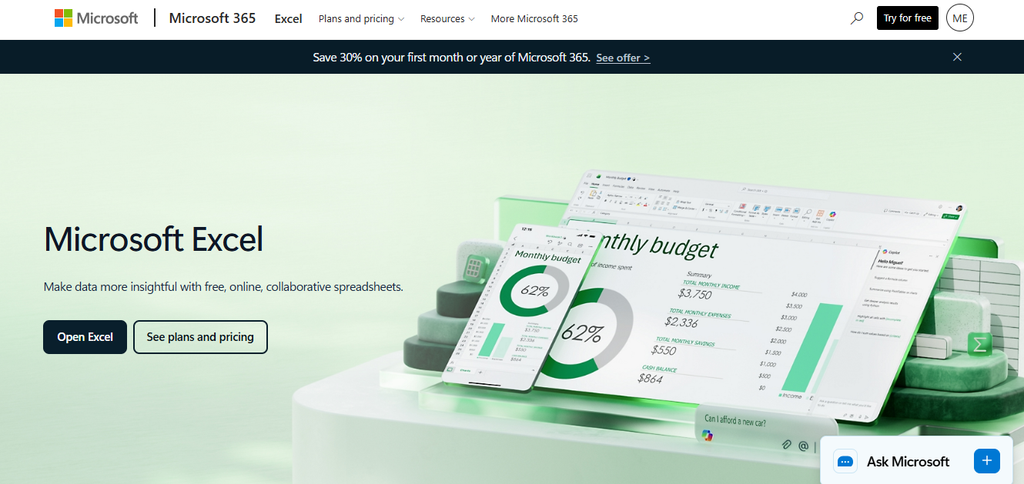
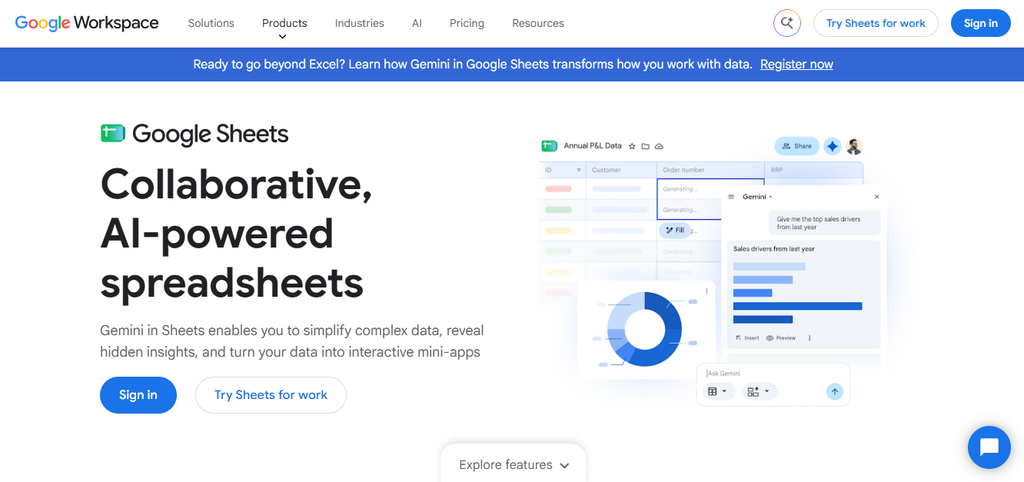
Spreadsheets are still the backbone of startup finance, and for good reason. Every investor can read one, every finance hire knows how to use one, and nothing is more flexible. A well-built three-statement model with a separate actuals tab, a drivers tab, and clear scenario switches will take a company a long way.
Pricing: Effectively free, since you’re almost certainly already paying for Microsoft 365 or Google Workspace. Templates range from free to a few hundred dollars.
Pros
- Total flexibility, with no vendor deciding how your business should be modeled.
- Universal familiarity among investors, bankers, and finance hires.
Cons
- Actuals have to be pasted in by hand, which is slow and where most errors creep in.
- Version control and access permissions break down once more than two or three people touch the file.
Best fit: Pre-seed and seed companies with one person owning the model and a monthly cadence of updating it.
Puzzle

Puzzle is accounting software, not an FP&A tool, and its help center says plainly that it doesn’t build budgets or multi-scenario models. So why is it on the list? What it does is the forecasting that matters most early on. Because the ledger updates continuously, it calculates burn and runway from current data, estimates when cash runs out and when to start raising, and produces a 13-week cash flow forecast from open invoices, bills, and payroll. When you outgrow that, it connects to FP&A tools like cfo.ai.
Puzzle.io Pricing: Month-to-month, Starter is $30, Core is $72, Complete is $120, and Scale starts at $360, with roughly 20% off for annual billing. Burn, runway, and variance analysis come in at Core.
Pros
- Forecasts are built on books that update continuously, so the runway number reflects this week, not last month.
- No separate tool, integration, or monthly copy-and-paste routine to maintain.
Cons
- No departmental budgets or multi-scenario modeling, so you’ll still need a spreadsheet or a planning tool for board scenarios.
- Built around digital-first companies, so inventory-heavy businesses will want a different accounting foundation.
Best fit: Early-stage teams whose core questions are cash, burn, and runway, and who want accurate actuals before they invest in planning software.
Jirav
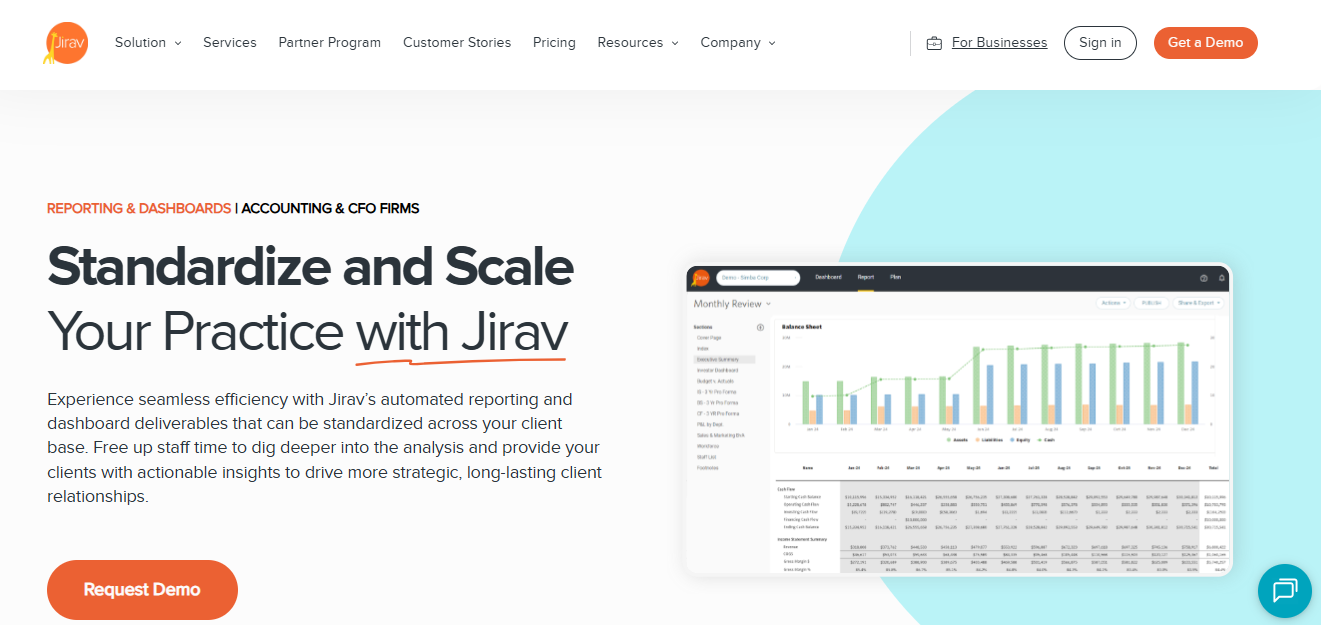
Jirav is one of the more accessible true planning platforms. It handles driver-based forecasting, three-statement modeling, and scenario analysis, and it connects directly to common accounting systems so actuals flow in without pasting. It’s often used by fractional CFO firms working across several smaller clients, which tells you something about where it fits on the ladder.
Pricing: Jirav’s business pricing is quote-based, but third-party sources put it at around $10,000 a year for Starter and $15,000 for Pro, with Enterprise priced higher. If you work with a fractional CFO or accounting firm, ask whether they offer Jirav, since firms get access through a separate partner plan.
Pros
- Established planning platform with real three-statement and scenario modeling, and a long track record with fractional CFO firms.
- Removes the monthly actuals paste by syncing directly with the general ledger.
Cons
- User counts, departments, and model length are capped by tier, so growing teams can hit limits quickly.
- Premium integrations like NetSuite are reserved for the Enterprise tier.
Best fit: Companies with a fractional or part-time finance lead who need real scenarios and budget-versus-actual reporting without a large software budget.
cfo.ai (formerly Runway)
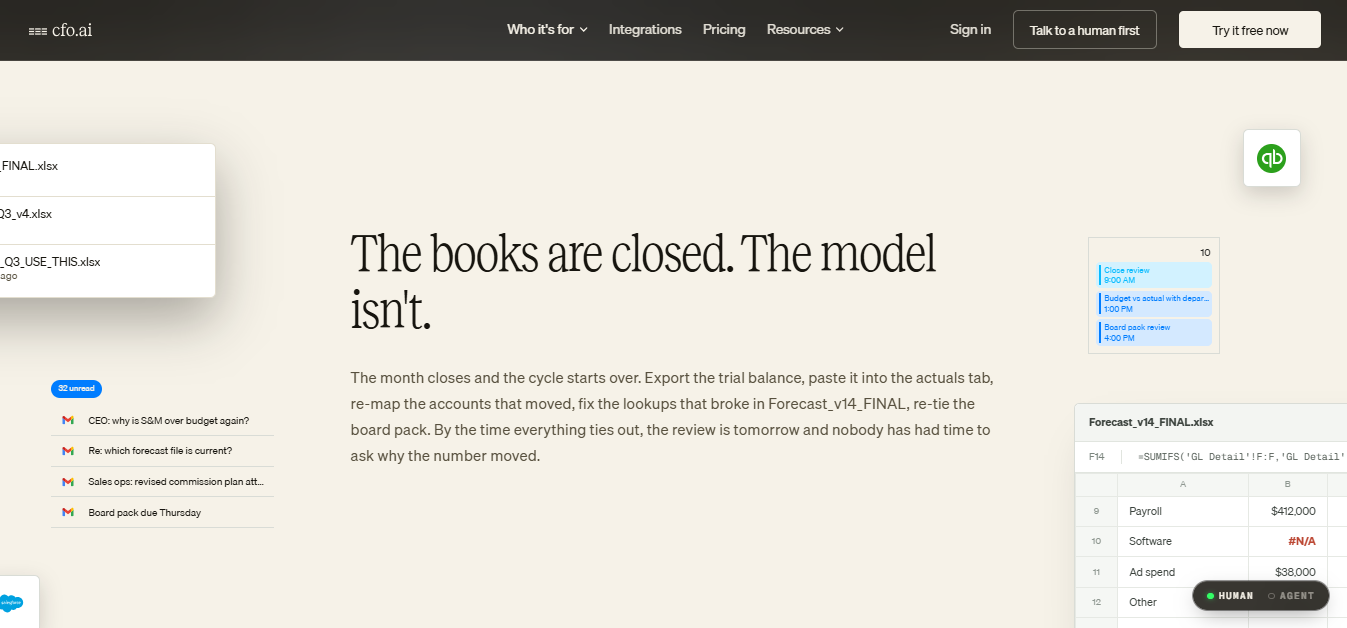
cfo.ai (formerly Runway) is a planning platform built for growth-stage companies, with a long list of integrations into accounting, CRM, HRIS, and billing systems. Since rebranding in September 2026, it’s built around an AI agent called Ari that creates the financial model from those systems and keeps it updated, so department heads and founders can get answers without emailing their numbers to finance.
Pricing: cfo.ai’s Startup plan is $375 a month, and Growth is $1,125 a month when billed annually ($500 and $1,500 month-to-month). Enterprise is custom, and there’s a 14-day free trial.
Pros
- Unlimited models and scenarios on every plan, so you can test different plans without paying more.
- Fast to set up for anyone who already works in spreadsheets, since it connects to Google Sheets and Excel and has built-in variance analysis.
Cons
- The AI CFO version only launched in September 2026, so it has a short track record in its current form.
- Lower plans cap integrations (5 on Startup, 8 on Growth), and enterprise ERPs require the custom Enterprise plan.
Best fit: Venture-backed startups with a small finance team, or founders without one, who need scenarios and plan-versus-actual tracking without a large software budget.
Abacum
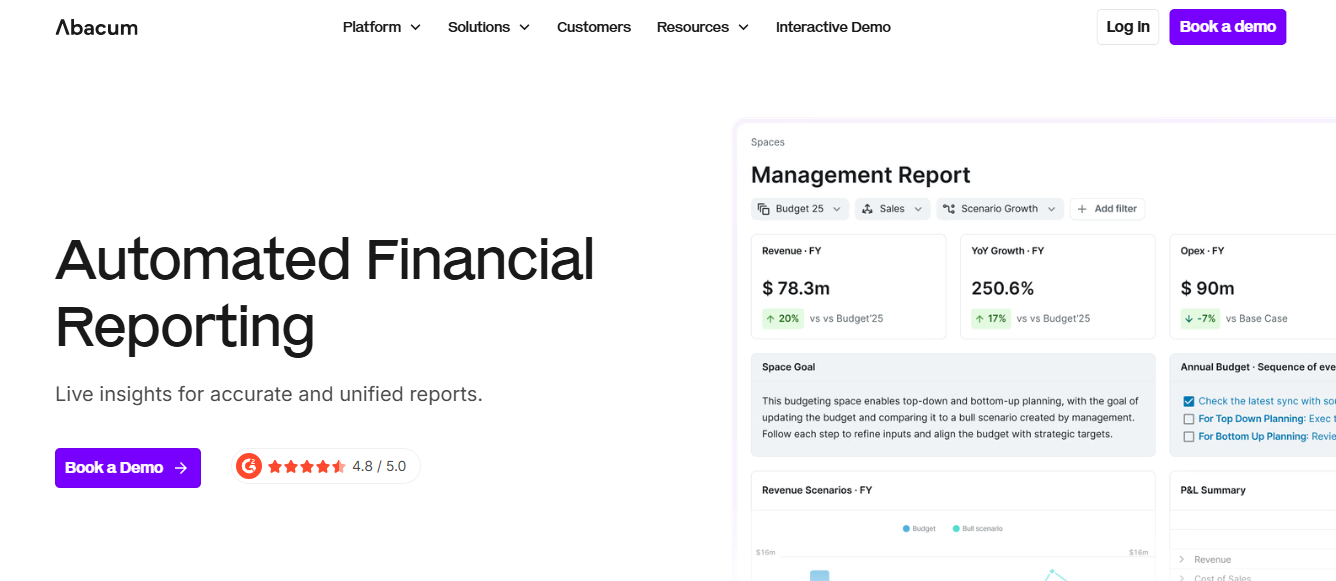
Abacum is a dedicated FP&A platform aimed at mid-market finance teams. It pulls data from the ERP, HRIS, and CRM into a single planning model, with collaborative budgeting, headcount planning, scenario modeling, and reporting built for the monthly business review. It’s the kind of tool that replaces a whole folder of linked workbooks once several departments own their own numbers.
Pricing: Abacum’s pricing is quote-based and not published. Vendr’s purchase data puts the median annual contract at $43,750, with contracts ranging from about $25,000 to $150,000 depending on scope.
Pros
- Pulls multiple data sources into one model, which matters once revenue and headcount data live outside the ledger.
- Strong collaborative workflows for companies running a formal budgeting cycle across many departments.
Cons
- The price only makes sense once you have a finance team with time to build and maintain the model.
- Implementation and data mapping take real effort, especially if your source data isn’t clean.
Best fit: Mid-market companies with a dedicated FP&A function and a formal annual planning process.
How to Choose Startup Budgeting and Forecasting Software Without Overbuying
Start with the decision you’re trying to make. If it’s “when do we need to raise,” invest in accurate books and a cash forecast first. If it’s “how much can marketing spend next quarter,” you need budgets by department. If it’s “what happens to the company under three different hiring plans,” you need a model with scenarios.
Next, be honest about who will maintain it. A planning platform without an owner becomes a very expensive version of last quarter’s spreadsheet. I’ve seen that happen more than once with clients who bought ahead of their team.
Finally, sequence the investment. Clean, current actuals come first, because every tool above depends on them. A solid spreadsheet model comes second. A dedicated platform comes third, when the pain of maintaining the spreadsheet costs more in time and errors than the software costs in dollars.

Which Forecasting Tool Should Your Startup Use?
There’s no single best budgeting and forecasting tool for startups. There’s the right one for where you are. For many early teams, that’s a platform like Puzzle that keeps the books current and answers the runway question automatically, paired with a spreadsheet for the occasional board scenario. As the company adds departments, budget owners, and a finance team, Jirav, cfo.ai, or Abacum start to earn their price.
Climb the ladder one rung at a time. The software at the top is excellent, but it’s built for a company you might not be yet, and there’s no prize for getting there early.


